Make everyday care visible to the people who deliver it.
Residents, relatives and visitors can recognise a named member of staff in a few taps, with no app to download. That praise becomes part of the worker's own feedback history and a clearer view of experience across homes, teams and roles.
The care that builds trust often leaves no record
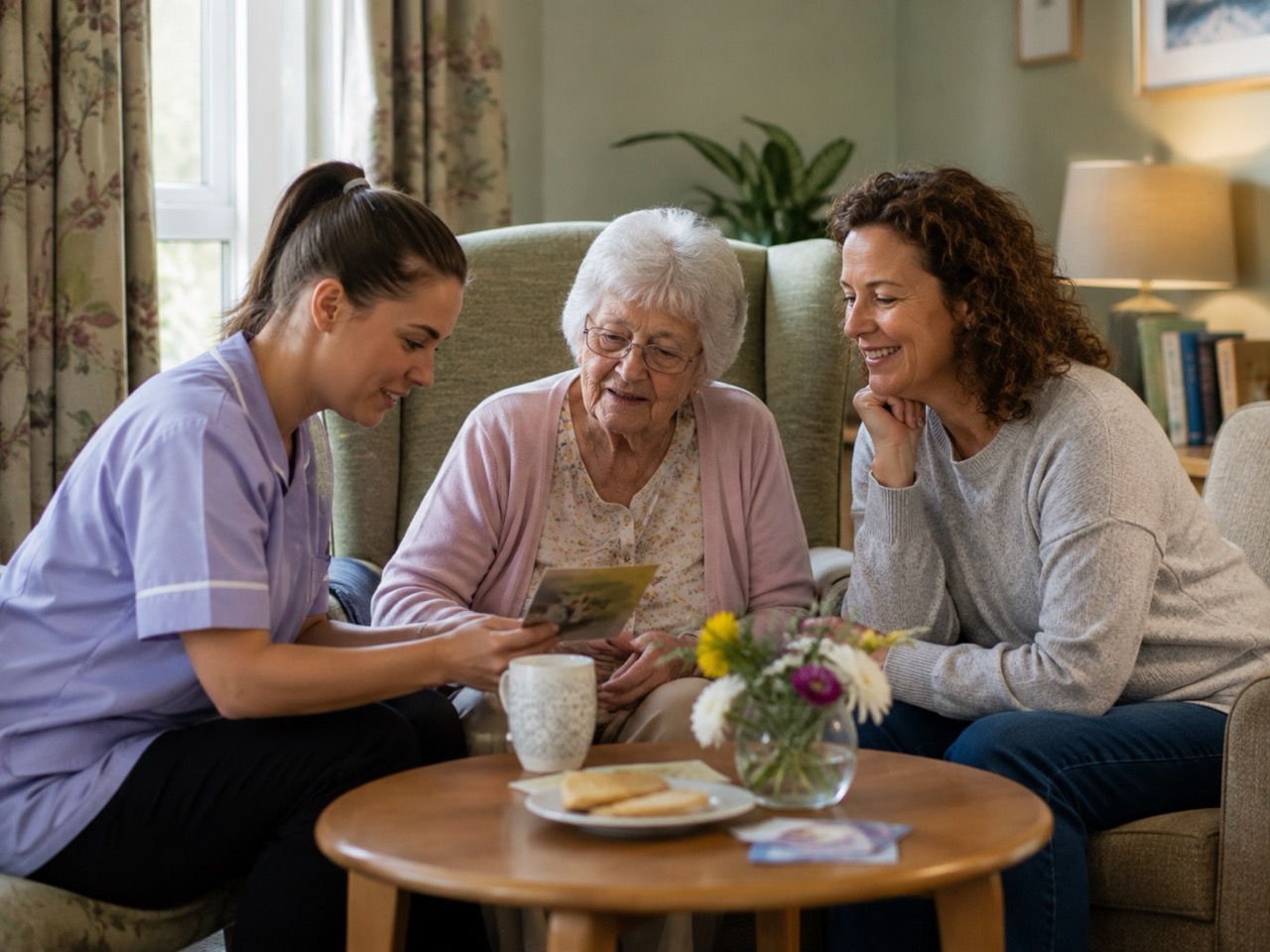
A resident is reassured before lunch. A care assistant remembers how they take their tea. An activities coordinator notices when someone needs encouragement. Families often recognise these moments in corridor conversations, cards or comments at reception, but the praise may never reach the person responsible or remain visible beyond that day.
Staff lose a valuable record of the consistency they bring to residents' lives. Leaders are left with complaints, incidents and periodic surveys, but less structured insight into the everyday practice families value, who is creating it and whether it is being experienced consistently across homes and teams.
Evidence that speaks your regulator's language
CQC assessment framework, using the five key questions
Health and Social Care Act 2008 (Regulated Activities) Regulations 2014, Regulation 18: Staffing
Pulse adds attributable resident and family experience to the wider evidence picture. It can show how everyday care is felt and who is creating it across the five key questions. It complements care records, staffing, safeguarding, incidents, outcomes and governance rather than replacing them.
Safe
Patterns around attentiveness, reassurance and being listened to add the resident and family perspective to safety oversight and can indicate where closer review is needed.
Effective
Praise for clear explanations, knowledge and practical support gives managers richer material for supervision, appraisal and staff development.
Caring
Repeated praise for kindness, patience, dignity and respect makes the daily practice behind a caring culture visible by person and team.
Responsive
Comments can show where staff understand routines, preferences and communication needs, helping leaders see how personal care feels in practice.
Well-led
Views across homes, teams and roles help leaders recognise consistently strong practice, notice uneven feedback and direct learning more thoughtfully.
How feedback actually gets collected here
Staff ID and lanyards
An approved QR on staff identification gives residents, relatives and visitors a direct route to the named person after an interaction.
Family welcome and update packs
A recognition card in admission information or routine family communications explains how to acknowledge staff during settling-in and throughout the resident's stay.
Reception and visitor areas
A small stand near reception or sign-out captures feedback while the visit is fresh, without interrupting time with the resident.
Activities and family events
QR cards on activity programmes or event materials help residents and guests recognise the staff who made the experience welcoming and inclusive.
A small act of care, recognised properly
A resident becomes anxious before a family visit. A care assistant notices, helps them choose a favourite cardigan and calmly explains when their daughter will arrive.
At the end of the visit, the daughter scans the reception QR, confirms the care assistant, answers four short questions and adds a comment.
That feedback becomes part of the worker's Pulse history. The home manager gains another specific example of the consistency families value, alongside patterns across the home and wider group.
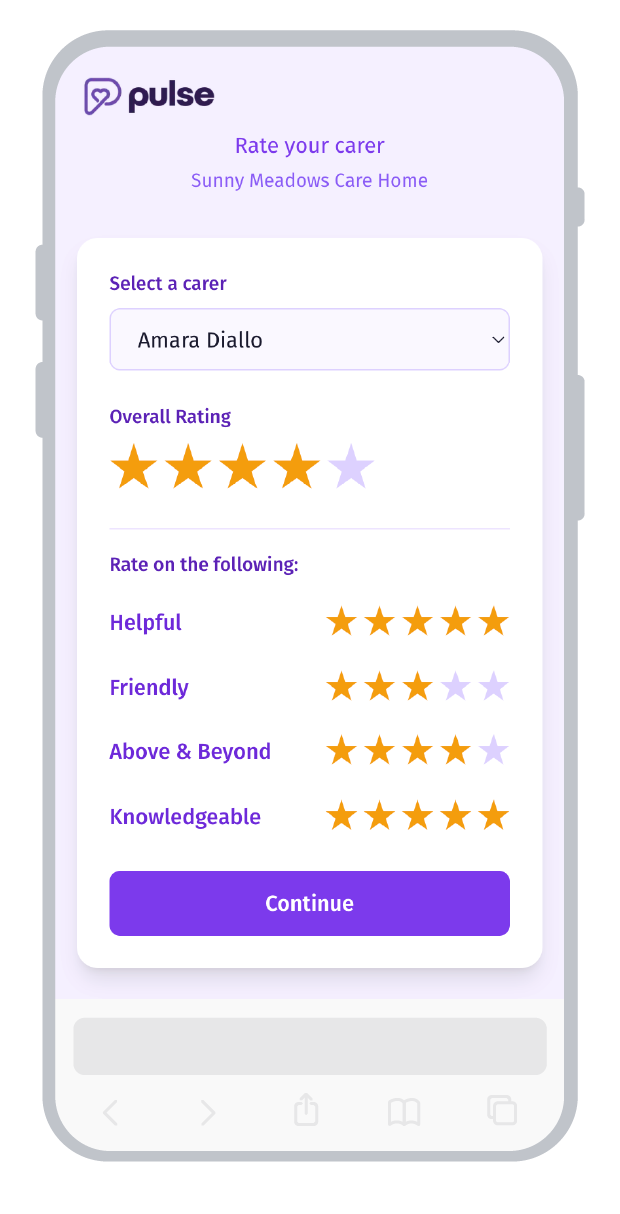
What this looks like in practice
When everyday recognition becomes visible across a care group
[Approved customer quote]
[Customer name] — [Role], [Organisation]
[Verified metric]
Approved evidence should demonstrate how a provider helped praise reach named staff and used recurring experience patterns across homes, teams or roles.
Questions we're often asked
Can residents, relatives and advocates all use Pulse?
Residents can respond directly where the journey is suitable for them. Relatives, visitors and advocates can also record what they personally experienced or observed, with their perspective kept distinct from the resident's own feedback.
What happens if a submission raises a concern?
Lower-scoring feedback can require more context and be held for management review. Complaints, safeguarding, incidents, whistleblowing and statutory notifications must still follow the provider's established routes.
How can Pulse support CQC evidence and Regulation 18?
Pulse can contribute attributable people's experience evidence across the five key questions and add useful material to supervision, appraisal and development conversations. It does not determine a CQC judgement or demonstrate Regulation 18 compliance by itself.
Let everyday care reach the person who made it happen.
Capture the moments residents and families already value, give staff a lasting record and turn those experiences into insight leaders can use.