Make individualised support visible without reducing it to a score.
A successful moment may be choosing independently, managing a transition, using the right communication method or knowing when to step back. Pulse lets people and those close to them recognise the named worker involved, while leaders see patterns without losing the context.

A score cannot explain why the support worked
Good support can mean helping someone make a choice without taking over, noticing sensory overload before it escalates or giving exactly the right amount of reassurance during a transition. These moments are specific to the person, their communication and what independence means for them.
Broad satisfaction measures flatten that context. Workers miss recognition for the judgement they used, while leaders struggle to see which teams are consistently supporting choice, confidence and communication well across different homes and service models.
Evidence that speaks your regulator's language
CQC assessment framework, using the five key questions
Pulse can connect feedback from people, families and advocates to the worker involved while keeping the source of each perspective clear. It adds experience evidence across the five key questions, to be considered with support plans, communication profiles, risk, safeguarding, clinical and outcome evidence.
Safe
Feedback about trust, calm support and feeling respected can reveal experience patterns that merit recognition or closer management attention.
Effective
Recognition can show where workers use communication approaches well, build confidence or support agreed goals in ways that matter to the individual.
Caring
Named comments make patience, dignity, warmth and respectful boundaries visible without collapsing the person's experience into an organisation-wide score.
Responsive
Feedback can capture how staff respond to preferences, routines, sensory needs and changing circumstances in the moment.
Well-led
Views across properties, services, teams and roles help leaders recognise dispersed staff and explore where experience patterns differ or deserve deeper review.
How feedback actually gets collected here
Person-chosen home touchpoints
A clearly labelled QR card can sit in a place selected with the person, ready for use after a support interaction that mattered to them.
Staff identification
A QR on approved ID gives people, relatives and advocates a direct route to the named support worker involved.
Review and planning materials
Recognition cards included with planned reviews allow families and advocates to record what they have observed while keeping their perspective explicit.
Community activity cards
A portable card can be used after an outing, appointment or activity, with the person's usual communication support available where appropriate.
When the right support means knowing when to step back
A busy café begins to feel overwhelming. The support worker notices, uses the person's agreed visual choice board and offers a quieter alternative without taking over the decision.
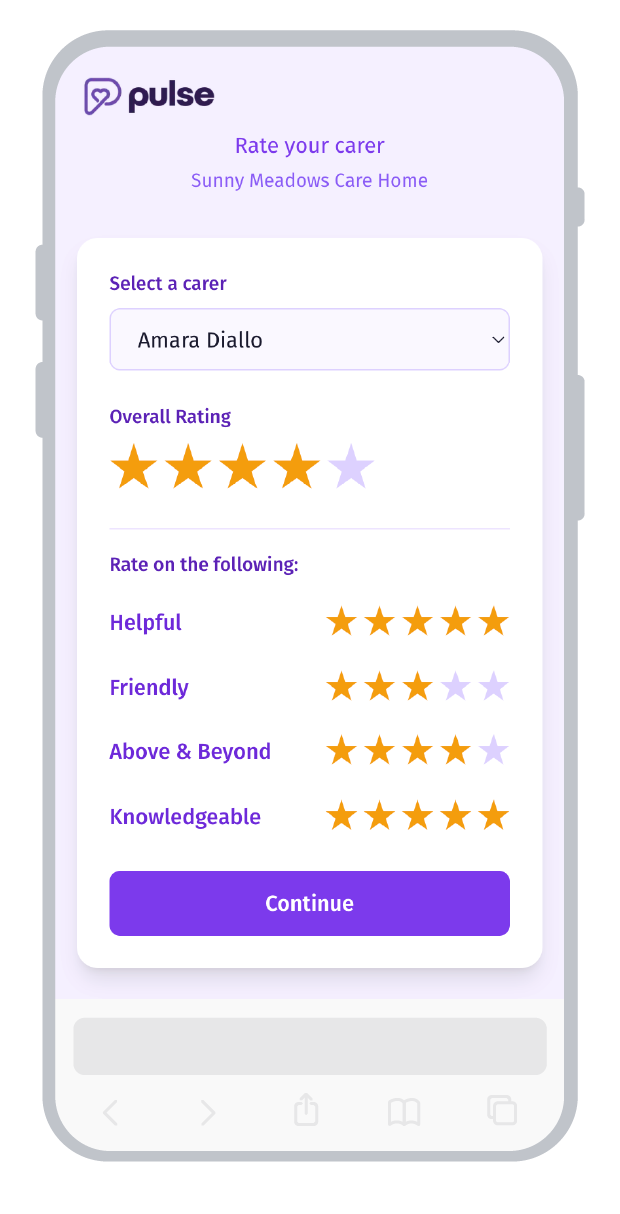
Later, with their usual communication support, the person scans the QR card at home and recognises the worker through four short questions.
The worker keeps that feedback in their own history. The service manager sees a specific example of judgement, communication and respect, then considers it with the support plan and wider outcomes rather than as a generic satisfaction score.
What this looks like in practice
Show the practice behind personalised support
[Approved customer quote]
[Customer name] — [Role], [Organisation]
[Verified metric]
The final approved case study needs to show how a provider made individual staff contributions visible across dispersed settings without losing the context of each person's support.
Questions we're often asked
Can family members or advocates provide feedback?
Families and advocates may contribute from their own standpoint and say what they observed. Where the person uses communication support, that support can help them respond directly. The two perspectives should remain clearly distinguishable.
How is concerning feedback handled?
An organisation can require additional context below an agreed threshold and hold the submission for management review. Any safeguarding, incident, clinical or complaints route must still be followed separately.
What can this add to CQC evidence?
Pulse can contribute attributable experience evidence about dignity, communication, choice, responsiveness and leadership oversight. It must be read alongside person-centred plans, outcomes and the provider's wider quality systems.
Recognise the judgement that makes support truly personal.
Give people and those close to them a simple route to thank named staff, then interpret that insight within the context that makes it useful.