See the quality your teams deliver behind every front door.
Most home care happens beyond a manager's view. Pulse lets people, relatives and unpaid carers recognise a named worker after a visit, giving independently working staff a direct record of praise and leaders a clearer picture across branches, teams and localities.
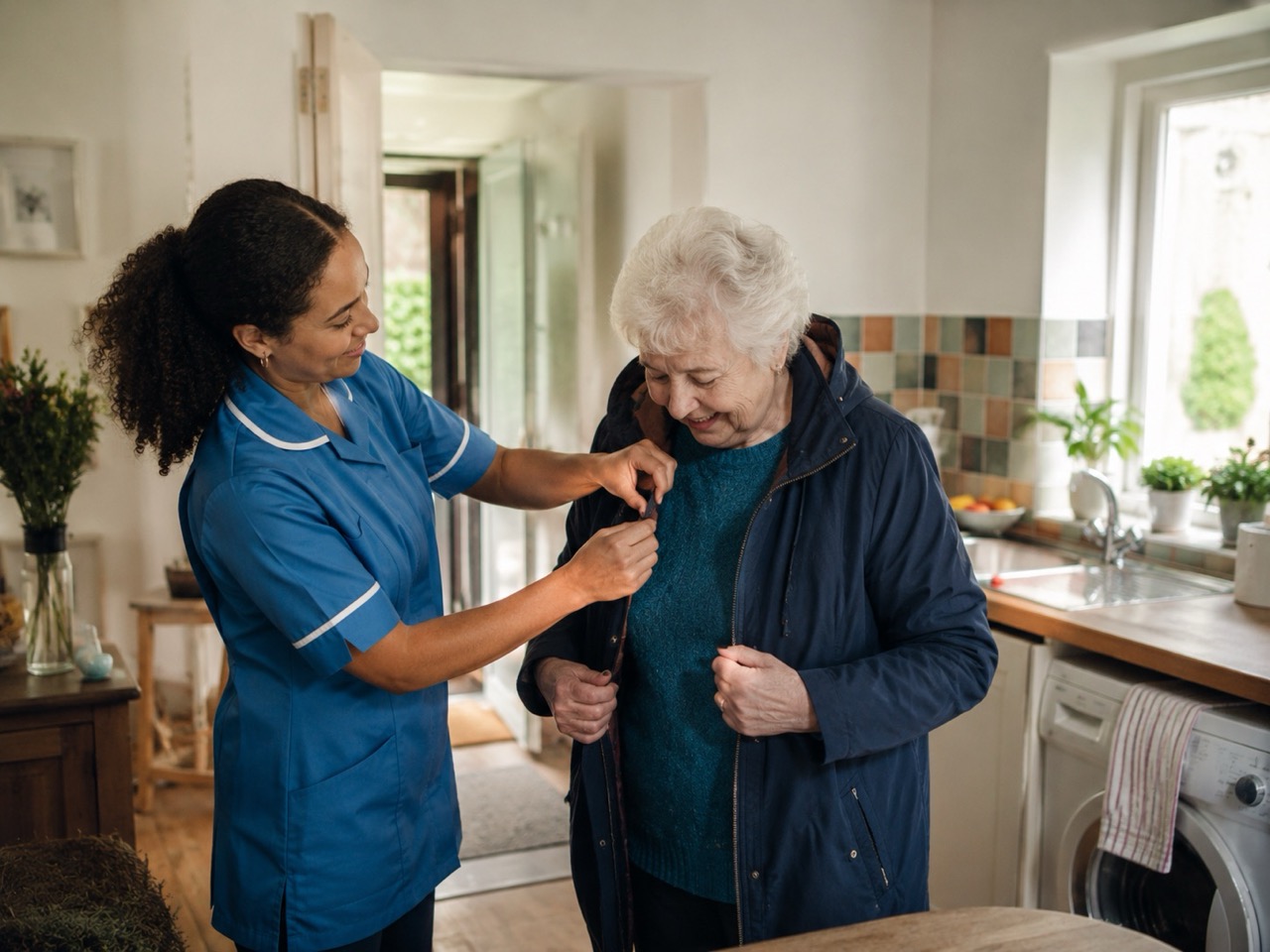
Great home care happens beyond management's line of sight
The moments that define home care take place across private homes, often with one worker and one person. Praise may surface in a call to the branch, during a review or through a relative weeks later. Just as often, it stays in the home and the worker never hears it.
That matters in a dispersed workforce. Care workers can feel invisible between visits, while branch and regional leaders have limited direct evidence of how support is experienced from one locality, branch or team to another. Good practice remains harder to recognise, discuss and repeat.
Evidence that speaks your regulator's language
CQC assessment framework, using the five key questions
Pulse brings the voice of people receiving care, relatives, unpaid carers and advocates into a service delivered largely out of sight. The resulting evidence can support the five key questions, alongside visit records, care plans, call monitoring, safeguarding, medicines, staffing and governance.
Safe
Feedback about trust, attentiveness and reassurance can add an early experience signal for managers to consider within wider safety controls.
Effective
Praise for knowledge, explanations and practical help adds lived-experience context to competency checks, outcomes, supervision and development.
Caring
Named feedback makes dignity, patience and respect visible where managers may never directly observe the relationship between worker and person.
Responsive
Comments can show how well workers adapt to routines, preferences, communication needs and changes within the person's home.
Well-led
Branch, locality, team and individual views help leaders recognise dispersed staff and examine whether positive experiences are consistent across delivery areas.
How feedback actually gets collected here
Care worker identification
A QR on approved ID or a companion card links the interaction directly to the worker who completed the visit.
Agreed in-home cards
A durable card kept in a place chosen with the person provides a familiar route for them or visiting relatives to respond after care.
Service welcome folders
A Pulse card within non-clinical welcome information introduces recognition from the start without placing anything inside confidential care records.
Care review correspondence
A QR included with planned review information gives relatives, advocates and unpaid carers a timely route to comment on support they have observed.
Recognition that travels from the home to the branch
After a late hospital discharge, a care worker arrives, helps the person settle, prepares something simple to eat and explains the updated routine to their daughter.
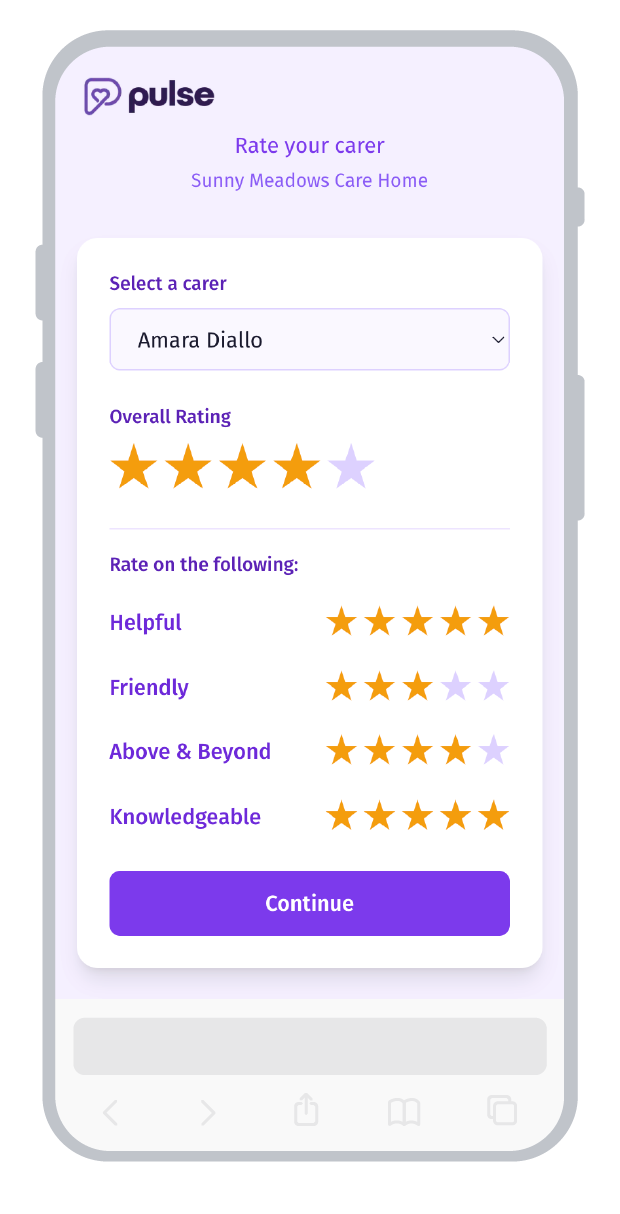
Later that evening, the daughter scans the QR on the agreed card in the home, selects the worker, completes four brief questions and records what made the visit reassuring.
The worker receives a specific thank-you rather than praise being lost in a call to the office. The branch manager sees a concrete example of calm communication and reliable support across a service they cannot routinely observe.
What this looks like in practice
Recognition from visits managers cannot witness
[Approved customer quote]
[Customer name] — [Role], [Organisation]
[Verified metric]
Once approved, this case study should demonstrate how a provider connected praise from dispersed visits to individual workers and clearer branch or regional insight.
Questions we're often asked
Who can respond when the person receiving care needs support?
The person can use Pulse directly where the journey is appropriate. A relative, unpaid carer or advocate may also record their own experience or observation, but that perspective should not be presented as the person's first-hand view.
Where does Pulse sit alongside complaints, safeguarding and visit reporting?
Pulse adds an immediate recognition and experience channel. Complaints, safeguarding, missed or late visits, medicines concerns, incidents, whistleblowing and statutory notifications remain within the provider's formal processes.
How can a dispersed service use Pulse in its CQC evidence?
It can contribute attributable people's experience evidence across the five key questions, with particular value in showing caring, responsiveness and leadership visibility across private homes. It cannot establish compliance or a CQC rating on its own.
Make care beyond the office visible to everyone who matters.
Give care workers recognition from the homes they support while leaders gain a more grounded view across branches, teams and localities.