One eye-care journey. Several people worth recognising.
Examination, explanation, advice, dispensing, fitting and collection each shape the patient's confidence. A simple QR touchpoint directs feedback to the named professional or colleague and helps leaders understand experience across roles and practices throughout the service.

A complete eye-care journey is too often reduced to a transaction
The optometrist explains an unexpected finding. A dispensing optician turns a complex prescription into understandable choices. An optical assistant adjusts the final fit at collection. Feedback about the visit is commonly attached to the practice or purchase, leaving these distinct professional and service contributions blurred together.
Individual staff miss recognition for the confidence they created. Practice and group leaders also have less visibility of where patients consistently feel listened to, well advised and comfortable with their choices across examination rooms, dispensing desks and collection appointments.
Evidence that speaks your regulator's language
GOC Standards of Practice for Optometrists and Dispensing Opticians
GOC Standards for Optical Businesses, where applicable
Pulse adds patient-experience evidence relevant to selected GOC standards, particularly communication, patient-centred care, respect and professional development. It does not assess clinical competence, validate consent or demonstrate compliance for an individual or optical business by itself.
Patient-centred decisions
Feedback can show whether patients felt heard and involved when discussing examinations, lenses, frames, contact lenses or follow-up.
Effective communication
Feedback on explanations and checked understanding reveals how professional advice is experienced across clinical and dispensing interactions.
Care and compassion
Named comments can capture patience and reassurance when a patient is anxious, receives unexpected information or needs additional support.
Respect and fairness
Patterns across roles and practices can show whether people consistently feel respected and treated fairly throughout the service.
Knowledge, skills and development
Recurring feedback themes can inform reflection, supervision and development priorities without being treated as proof of professional competence.
How feedback actually gets collected here
Examination take-away cards
A card offered after the consultation lets patients respond privately once they have considered the explanation and next steps.
Dispensing desks
A discreet QR beside the fitting or lens discussion point creates a natural route to recognise the colleague who guided the choice.
Collection inserts
A Pulse card placed with new spectacles invites feedback after final fitting, adjustments and care advice have been completed.
Contact lens aftercare
An approved QR on aftercare information lets patients acknowledge the professional who explained handling, hygiene, comfort or follow-up.
When clear advice becomes confidence at collection
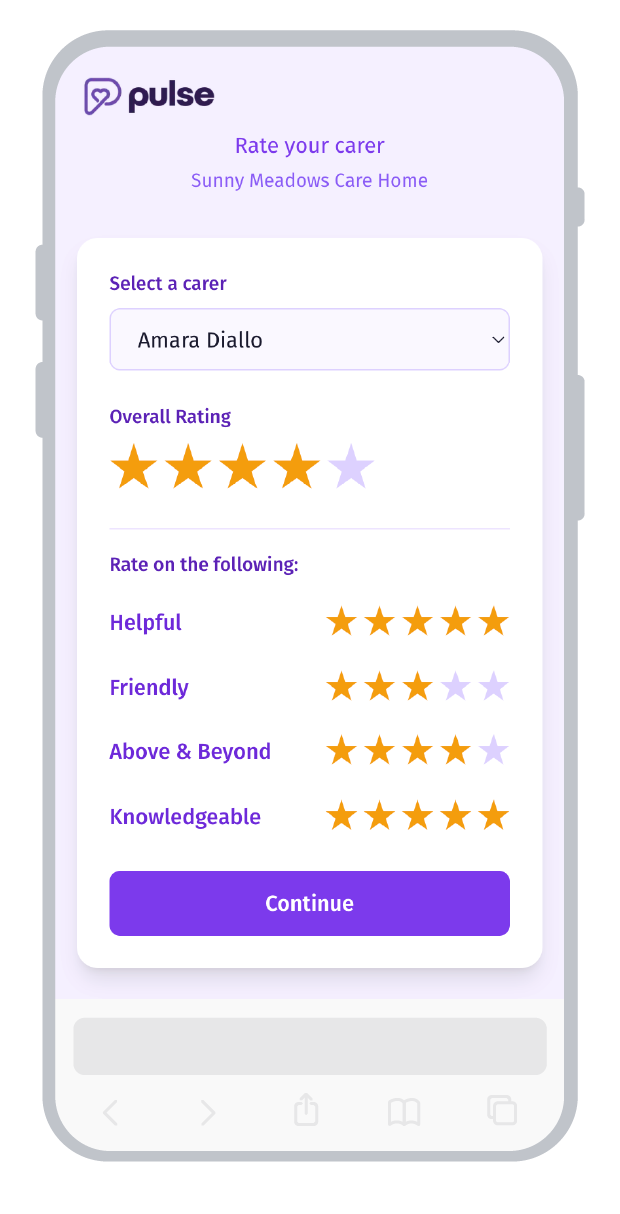
A first-time varifocal wearer is uncertain about the options and worried about adapting. The dispensing optician asks how the patient uses their glasses, explains the trade-offs plainly and adjusts the fit when they return to collect them.
The collection-pack QR opens four brief questions. The patient selects the dispensing optician and records how confident the advice made them feel.
That recognition joins the individual's Pulse history, while the area manager gains a grounded view of communication across practices and roles.
What this looks like in practice
How the full patient journey could become visible
An optical group could invite feedback after eye examinations, dispensing conversations, contact lens appointments and spectacle collection. Patients could recognise the optometrist who listened carefully, the dispensing optician who made choices understandable or the colleague who perfected the final fit. Staff would retain their own feedback histories, while leaders could compare communication and care themes across practices and roles. This would add experience evidence, not a clinical competence score or regulatory judgement.
Questions we're often asked
Can a parent or carer respond for a patient?
They may respond based on the appointment they attended and the support they witnessed, particularly when accompanying a child or another person. Their perspective should remain distinct from first-person patient feedback.
Does Pulse replace complaints or optical clinical-governance processes?
No. Complaints, safeguarding, consent, adverse-event handling and clinical governance remain within their established routes. Pulse adds immediate recognition and structured experience feedback. Configured thresholds can hold lower-scoring submissions for review.
What can the feedback add in relation to GOC standards?
It can provide patient-experience evidence relevant to communication, patient-centred care, respect and professional reflection. It does not prove competence, confer regulatory approval or demonstrate compliance on its own.
Show who creates confidence at every stage of eye care.
Connect patient appreciation to named people, then see where clear professional care and service are being recognised across your practices.