One practice experience is created by many different people.
Access, navigation, clinical care, explanation and follow-up may involve several roles. Pulse lets patients recognise the named colleague who helped them, then shows practice and PCN leaders where strong experiences are being created across the team.

The surgery score hides the journey behind it
A patient may first speak to a receptionist, be guided by a care navigator, see an HCA for observations, receive advice from a pharmacist and then consult a GP or nurse. A general practice rating folds those distinct contributions into one judgement and rarely returns praise to the person who earned it.
Partners, practice managers and PCN leaders are left with limited role-specific insight into access, communication and follow-up. That makes it harder to recognise non-clinical and clinical colleagues fairly, or to understand which parts of the practice experience are consistently building confidence across sites and teams.
Evidence that speaks your regulator's language
CQC assessment framework, using the five key questions
Pulse adds named patient, relative and carer feedback across clinical and non-clinical roles. It can strengthen the people's experience evidence considered under the five key questions, while access data, clinical outcomes, safety, staffing and governance remain essential to the wider assessment picture.
Safe
Patients can indicate whether they felt heard, reassured and clear about what would happen next, highlighting experience patterns for review.
Effective
Feedback about understandable advice, coordinated support and checked understanding adds the patient perspective to audit, competency and development evidence.
Caring
Empathy and respect become attributable across reception, care navigation, nursing, pharmacy, HCA and GP roles rather than remaining general sentiment.
Responsive
Role and team patterns can show where patients value helpful navigation, accessible communication and support adapted to their circumstances.
Well-led
Practice, site, team and role views help leaders recognise staff consistently and identify where patient-experience themes deserve closer attention.
How feedback actually gets collected here
Reception departure point
Positioned near the exit, the QR lets patients recognise a reception colleague, care navigator or clinician after their visit.
Consultation take-away card
A small card allows the patient to respond privately after seeing a GP, nurse, pharmacist or HCA.
Clinic information
Approved materials for vaccination, screening or long-term-condition clinics can carry a QR linked to the relevant practice journey.
Home-visit information
A card left after an agreed home visit gives the patient or carer a route to recognise the named professional without returning to the surgery.
When the person who solved the access problem is recognised
A patient calls with worsening symptoms but is unsure which service they need. A care navigator listens, checks the practice process and secures the appropriate same-day appointment.
On the way out, the QR near reception opens four brief prompts. The patient selects the care navigator and records how clearly they were guided.
The feedback is added to that colleague's Pulse history, not just the practice record. The manager can also compare themes across access roles, teams or sites.
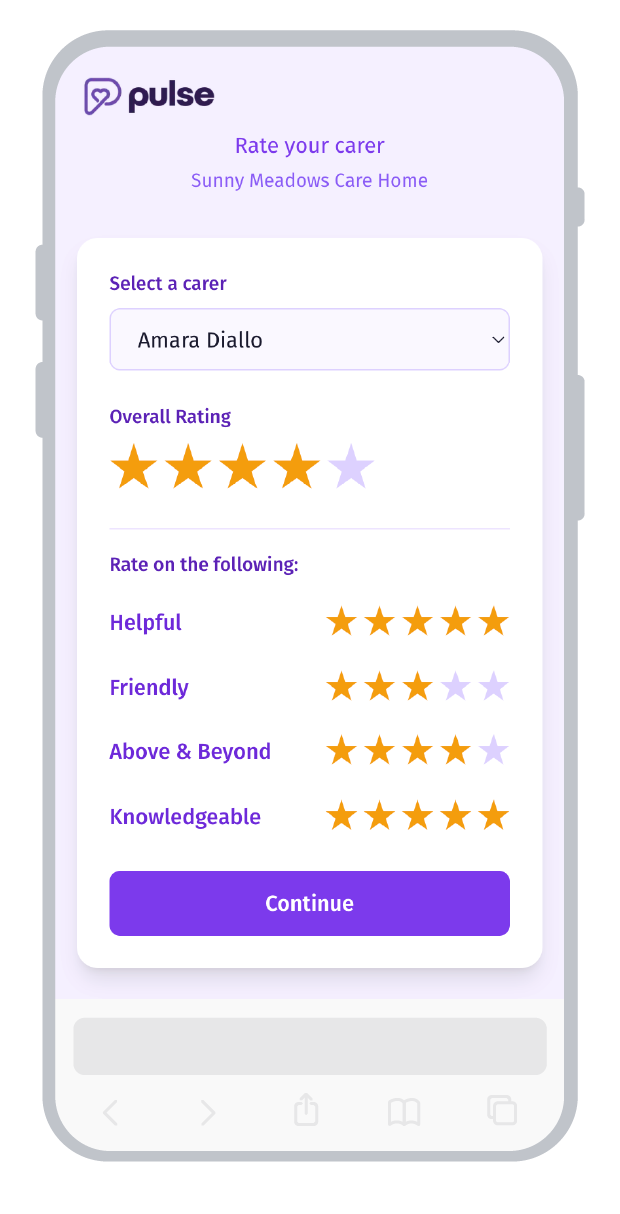
What this looks like in practice
How this could work across a PCN
A PCN could deploy Pulse across several practices, with touchpoints after consultations, care-navigation contacts and nurse-led clinics. Patients could recognise the specific colleague who made access easier, explained a plan clearly or followed up with care. Staff would retain their own feedback histories, while practice and PCN leaders could examine differences by role and site. This would add richer experience insight without being presented as evidence of clinical quality on its own.
Questions we're often asked
Can a relative or carer submit feedback after a practice contact?
They may comment on the contact they took part in or supported, particularly where they helped the patient navigate the service. Their response should remain distinct from first-person patient feedback.
Is Pulse a replacement for the Friends and Family Test or complaints process?
No. It adds named, in-the-moment recognition rather than replacing formal surveys, complaints, safeguarding, significant-event review, clinical governance or statutory reporting.
What can a practice use as supporting CQC evidence?
Pulse can provide attributable people's experience evidence across access, clinical and support roles, relevant to all five key questions. It does not assess clinical quality, establish compliance or predict a rating.
Put every contributor to patient experience into view.
Recognise the people behind access, care and follow-up, then give practice leaders insight that reflects the whole service.