Recognise the whole team behind patient reassurance.
An anxious patient may remember the dental nurse, receptionist or hygienist as clearly as the dentist. A quick QR interaction directs that appreciation to the named person and gives practice leaders a fairer view across roles and locations.

An anxious patient experiences the whole team, not one clinician
Confidence may begin with the receptionist who finds an urgent appointment, grow through the nurse who explains what will happen and depend on the hygienist, therapist or dentist communicating clearly throughout care. A public practice review rarely separates those contributions or tells each person what they did well.
Principals and group leaders are left with broad reputation data but less insight into who consistently reduces anxiety, protects dignity or makes aftercare understandable. Valuable staff recognition and useful differences between roles, practices or teams remain hidden inside one overall score.
Evidence that speaks your regulator's language
CQC assessment framework, using the five key questions
Pulse records patient-experience feedback against named clinical and non-clinical colleagues. It can add evidence across the five key questions, particularly around communication, care and responsiveness, while clinical records, consent, safeguarding, infection control, complaints and governance remain separate.
Safe
Patients can show whether they felt able to ask questions, understood what would happen and were supported when anxious or uncertain.
Effective
Patient acknowledgement of clear explanations, preventive advice and understood next steps adds useful context to audit, competency and development evidence.
Caring
Named feedback makes reassurance, dignity and respectful communication visible across dentists, nurses, hygienists, therapists and reception teams.
Responsive
Patterns may show where patients value urgent-access support, communication adjustments or practical aftercare across different practices and roles.
Well-led
Practice, role and group views help leaders recognise staff consistently and decide where feedback should shape coaching, training or service review.
How feedback actually gets collected here
Reception and check-out
A QR at the departure point lets patients recognise any named colleague involved while the visit is still fresh.
Aftercare information
A Pulse card included with post-treatment instructions gives patients time to respond after the explanation has been put into practice.
Hygiene and prevention materials
An approved QR on preventive-care information creates a natural route to recognise hygienists, therapists and supporting nurses.
New-patient folders
A recognition card in onboarding information explains how patients can acknowledge clinical and reception staff across their first appointments.
The dental nurse behind a calmer appointment
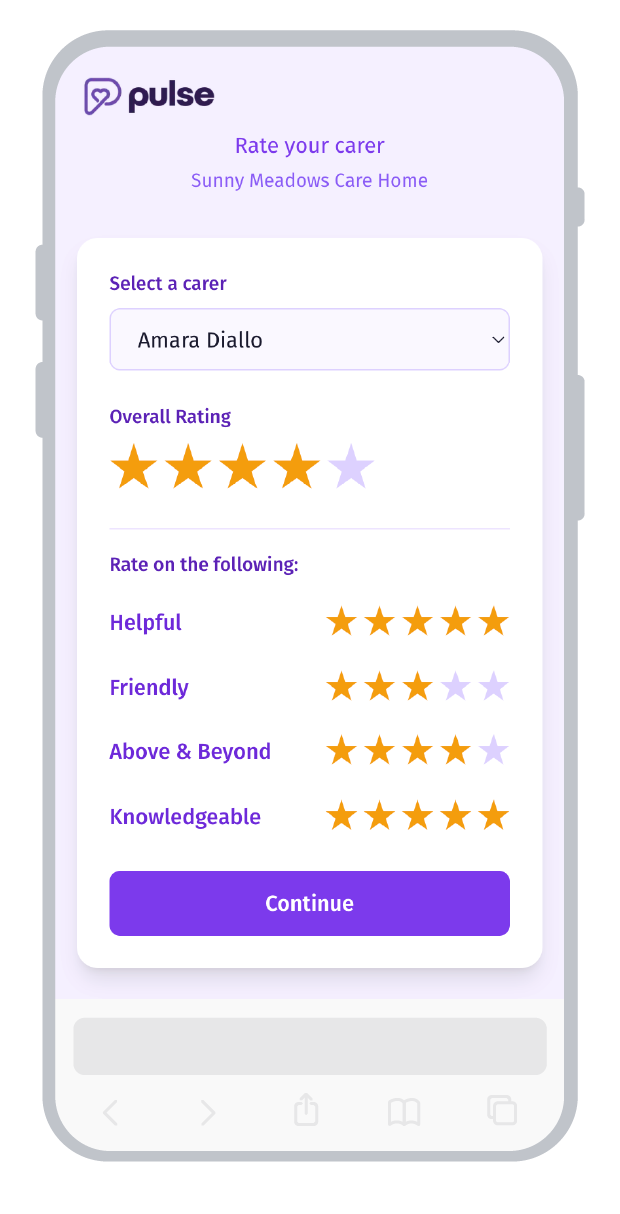
A nervous patient arrives for an extraction and becomes unsettled in the surgery. The dental nurse explains each stage in plain language, notices when the patient needs a pause and repeats the aftercare instructions before departure.
At reception, the QR opens four brief questions. The patient selects the nurse and adds a short comment.
The feedback is added to the nurse's personal record. The practice manager gains a clear example of the communication and reassurance patients value within the nursing team.
What this looks like in practice
What wider team recognition could reveal across a dental group
Consider a dental group introducing Pulse at reception, in aftercare packs and following hygiene appointments. Patients could recognise the receptionist who found a suitable slot, the nurse who reduced anxiety or the clinician who made options clear. Individuals would receive that feedback directly, while regional leaders could see recurring themes by practice and role. The resulting view could inform recognition and development alongside the group's established clinical-governance and CQC evidence.
Questions we're often asked
Can a parent, guardian or carer provide the feedback?
They may respond from the appointment they attended and set out what they observed, particularly when supporting a child or another patient. Their perspective should remain distinct where the patient can also respond for themselves.
What still belongs in the practice's formal systems?
Complaints, safeguarding, consent, incidents, clinical audit and other governance processes remain there. Pulse provides a separate layer of individual recognition and patient-experience evidence. Scores below the agreed threshold can be held for a manager to assess.
How can the feedback support CQC evidence?
It can add attributable experience evidence relevant to communication, dignity, reassurance, responsiveness and leadership oversight. It does not establish clinical compliance or determine a CQC judgement.
Give the wider dental team the recognition patients already feel.
Show leaders which people and behaviours help patients feel informed, respected and at ease across every practice.