Make the quality of care visible, while it is happening.
Some of the most important moments in early years care are hard to capture — a child settling because somebody understood what they needed, or a practitioner handling a difficult moment with patience. Pulse creates a simple way to capture those experiences as they happen, turning everyday feedback into recognition for practitioners and useful quality insight for leaders.

Good care happens every day. Evidence of it is harder to capture.
Early years settings operate in environments where quality, consistency and the child's experience matter enormously. Yet much of what demonstrates good care exists in conversations, observations and individual moments, and it can be difficult for leaders to collect that consistently across rooms, practitioners and settings.
That creates a gap between the care being delivered and the evidence available to understand it. Pulse helps close that gap by giving parents and carers a simple way to recognise what they are seeing, building a continuous picture of what is working well and where attention may be needed.
Evidence that speaks your regulator's language
Ofsted early years inspection toolkit, read alongside the EYFS statutory framework
Early years foundation stage requirements relating to partnership with parents and carers
Pulse does not replace inspection evidence, statutory records, safeguarding processes or a setting's formal quality assurance. It gives early years providers another source of evidence about what people are actually experiencing — parent partnership, everyday practice, staff behaviour and leadership's use of feedback. Where a provider's services extend into related areas such as SEND support or fostering, the same approach can add a similar layer of experience evidence there too.
Inclusion
Families can identify practitioners who understand individual needs, communicate thoughtfully and make adjustments that help their child take part.
Curriculum and teaching
Parent feedback can show where practitioners explain learning clearly and connect activities to a child's interests or development.
Behaviour, attitudes and establishing routines
Settling-in, transitions and familiar routines become visible through the experience of the parents and carers navigating them with the setting.
Children's welfare and well-being
Recognition can capture warmth, reassurance, careful handovers and the everyday relationships that help families feel their child is known.
Leadership and governance
Room, setting and group views help leaders recognise practitioners consistently and use recurring parent themes in development and quality improvement.
How feedback actually gets collected here
Arrival and collection points
A small QR near sign-in or the exit lets parents respond after a handover, settling-in moment or useful conversation.
Settling-in information
A recognition card in new-family packs introduces the route during the period when communication and reassurance matter most.
Room communications
An approved QR in room newsletters or digital updates lets families recognise the practitioner behind a particularly helpful explanation or update.
Parent consultations and family sessions
A table card at planned meetings, stay-and-play sessions or workshops invites feedback after a longer conversation or observed interaction.
A collection handover that becomes more than a thank you
At collection, a key person explains that a child became upset after lunch, how they helped her settle and which activity restored her confidence.
The parent scans the QR by the exit, chooses the practitioner, completes four brief questions and adds a comment about feeling informed rather than worried.
The comment is added to the practitioner's feedback history. The nursery manager can see the strength within the room, while group leaders can examine whether similarly clear handovers are being recognised elsewhere.
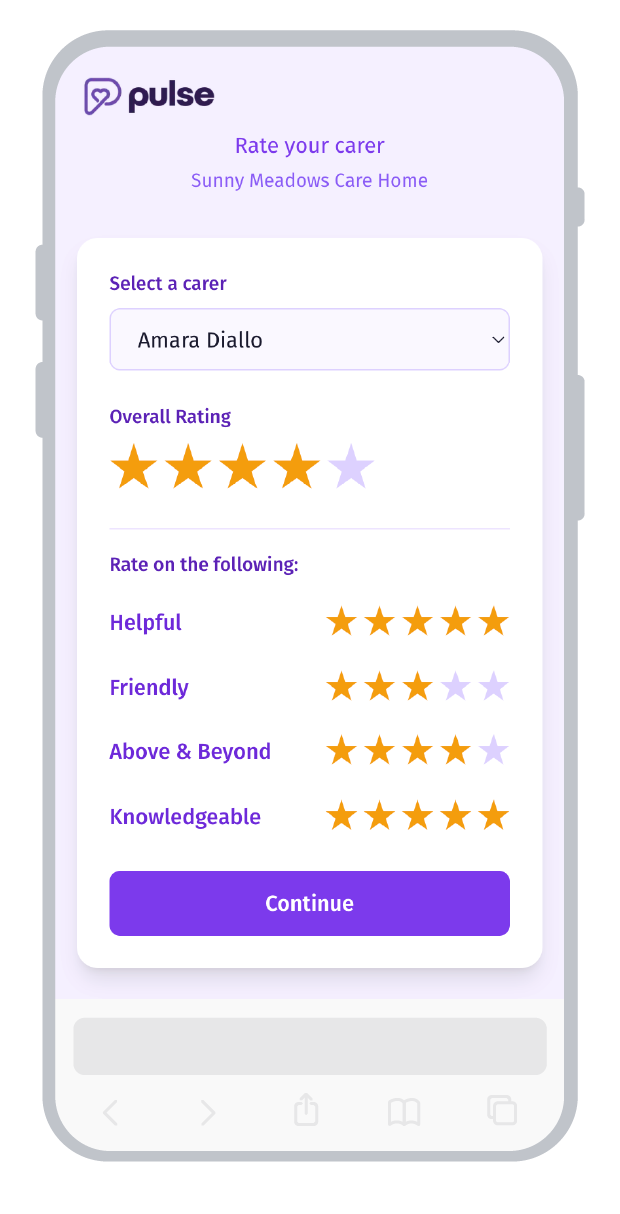
What this looks like in practice
A group-wide rollout across early years settings
A nursery group could introduce Pulse across its settings and begin collecting feedback from parents and carers as part of everyday drop-off and collection. Individual practitioners would receive recognition personally, while managers could see recurring themes emerge, including where communication is particularly strong, where families consistently feel listened to, and which rooms or settings are creating especially positive experiences. Those insights could then inform recognition, supervision and professional development alongside the group's existing quality processes, so instead of reconstructing the experience of a setting before a review, leaders have been listening throughout.
Questions we're often asked
Is Pulse only designed for nurseries?
No. Pulse is built around early years and childcare, and the same approach can extend to related services a provider may run, such as SEND support or fostering. The feedback journey and the people invited to take part can be adapted to the setting.
Does Pulse provide Ofsted compliance?
No. Pulse supports Ofsted-aligned quality evidence but does not determine compliance or inspection outcomes. It provides an additional source of structured parent, carer and practitioner feedback that can complement a setting's existing evidence and quality processes.
Can children provide feedback themselves?
Where it is appropriate for their age and ability, yes. In most early years settings, feedback will come from parents and carers who can speak to what they have seen and experienced.
Does this replace complaints or safeguarding processes?
No. Formal complaints and safeguarding concerns should continue through your setting's established procedures. Pulse provides an additional feedback and recognition route, with management oversight available for anything that needs it.
Make everyday care part of your quality picture.
Give your people the recognition they deserve while giving leaders a clearer view of the experiences happening across their settings.